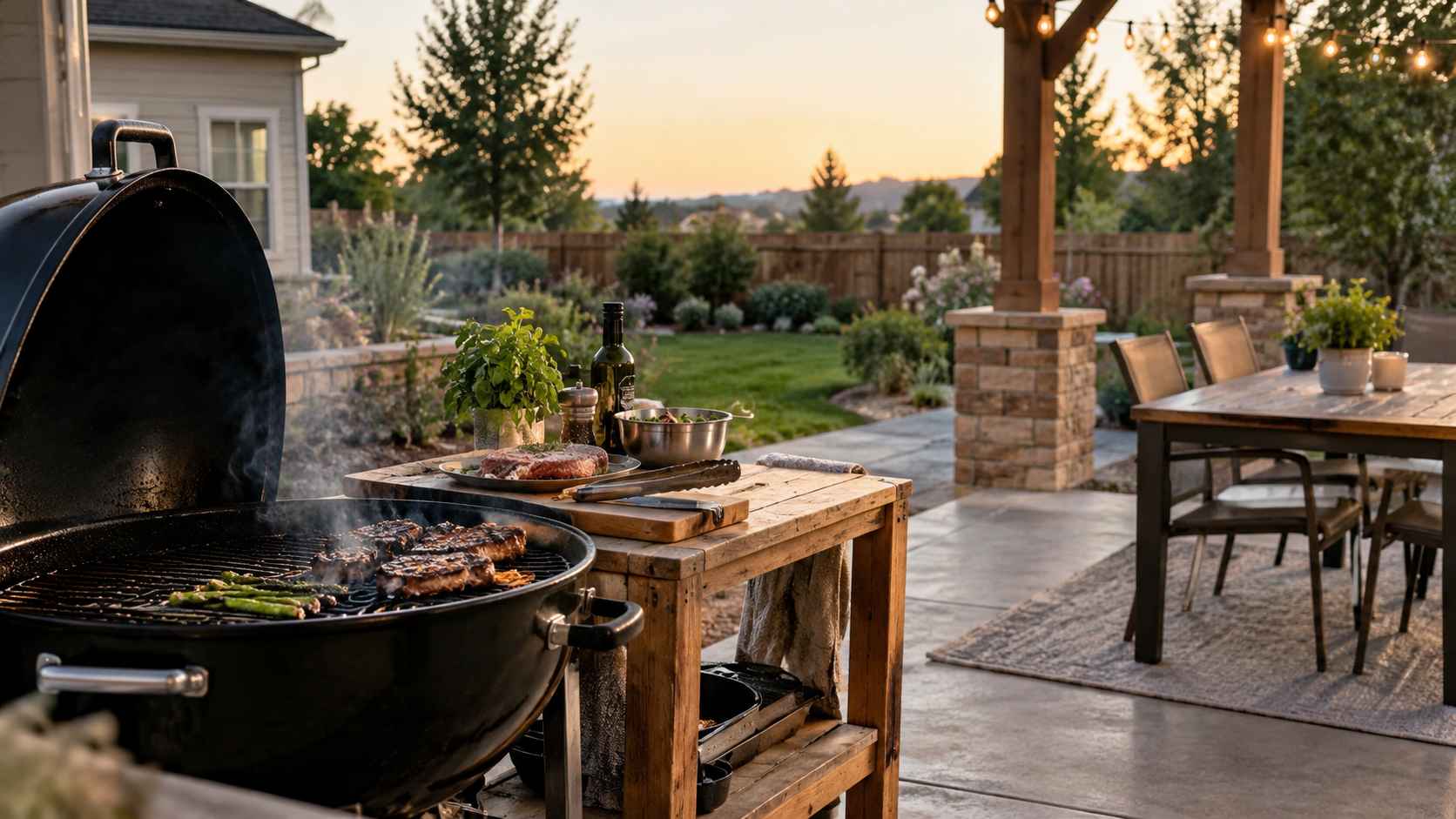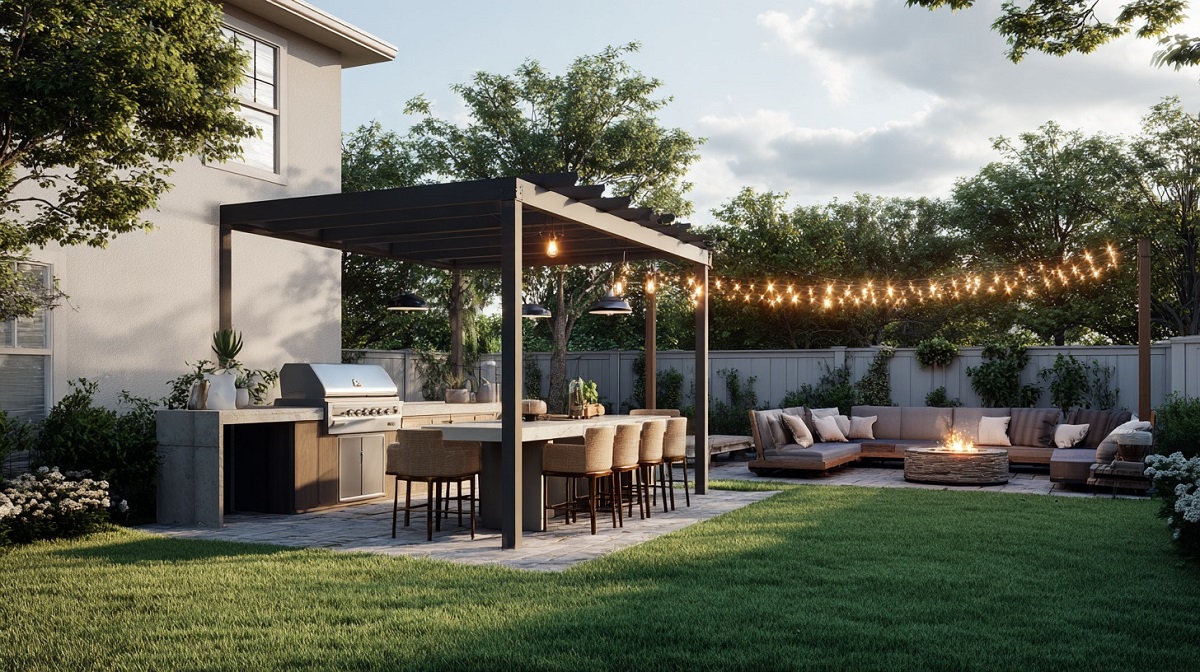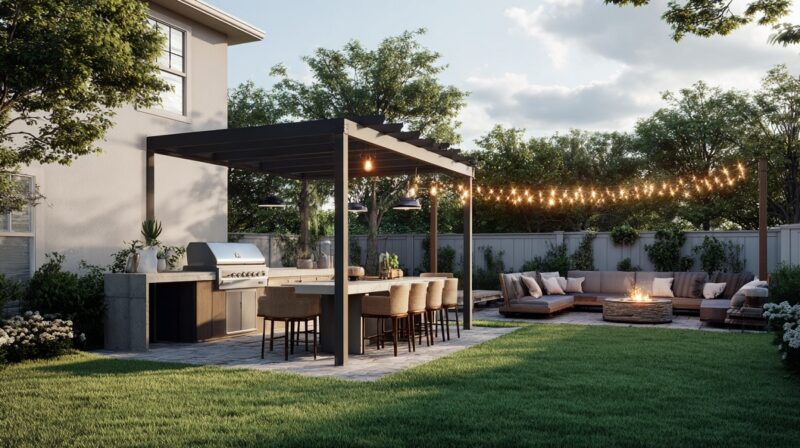
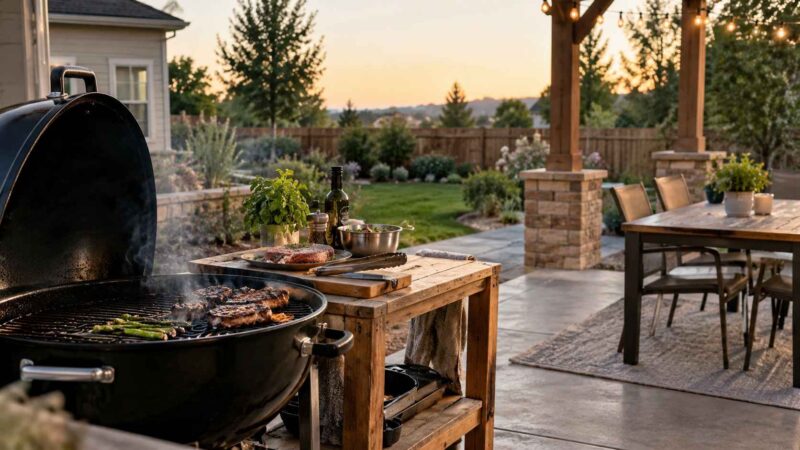
A backyard BBQ area does not need a $10,000 grill, a stone countertop or an outdoor refrigerator. A decent charcoal grill, a sturdy preparation table and somewhere comfortable to eat can turn an ordinary patio into a place for weekend cookouts.
Start adding built-in cabinets, plumbing and a covered dining area, though, and the price climbs quickly. Even a relatively small outdoor kitchen can cost thousands of dollars before you buy your first bag of charcoal.
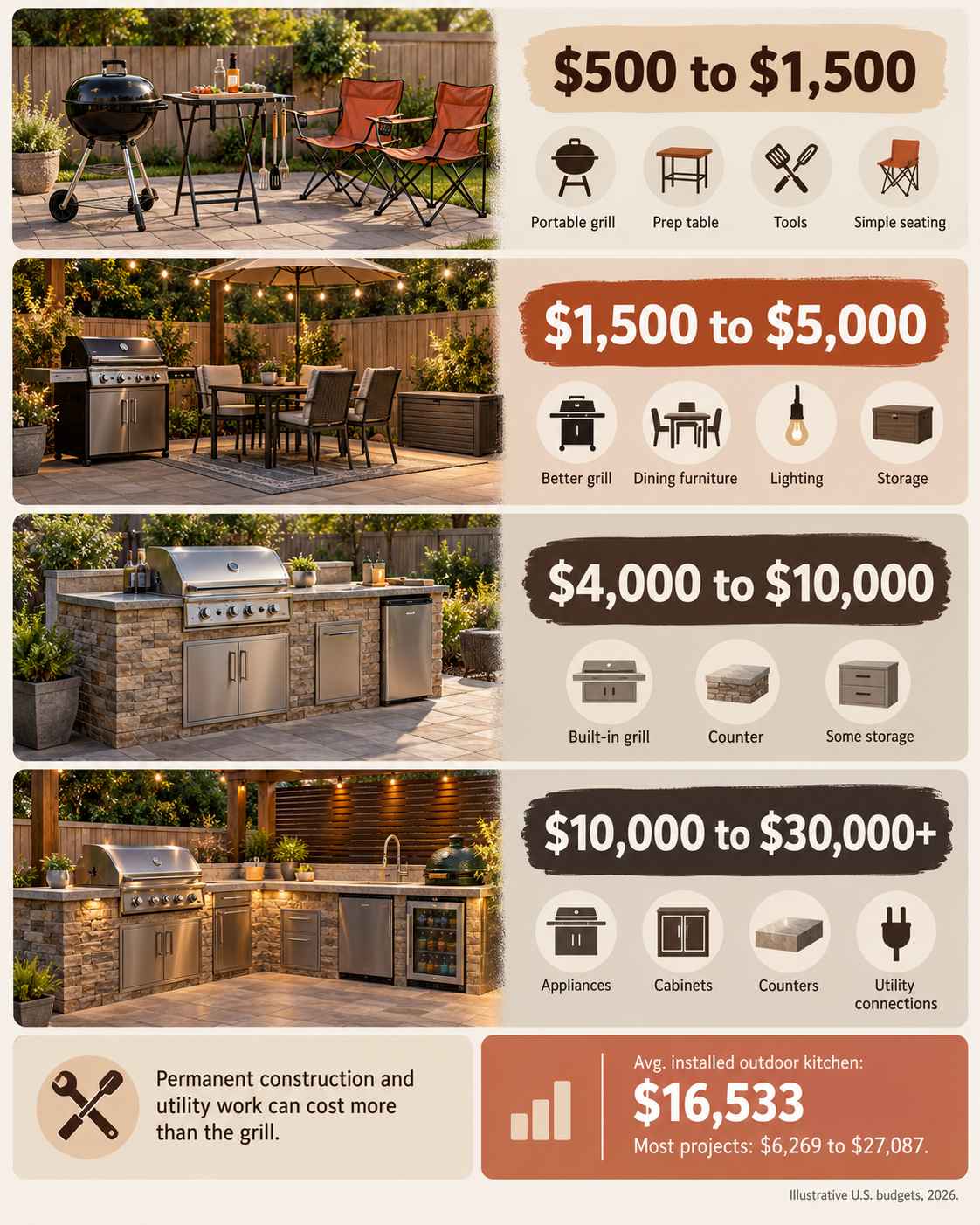
For a basic backyard BBQ area, plan to spend $500 to $1,500 if you already have a suitable patio. A more comfortable setup with better equipment and dining furniture may cost $1,500 to $5,000. A professionally installed outdoor kitchen can cost $6,000 to $27,000 or more.
Here is what you actually need, which purchases are worth the money and where you can save without making outdoor cooking inconvenient.
How Much Does It Cost to Build a Backyard BBQ Area?
The biggest expense is not always the grill. Installing a new patio, running a gas line or building an outdoor counter can cost more than the cooking equipment itself.
| BBQ Setup | Estimated Total Cost | What You Get |
| Basic backyard BBQ | $500 to $1,500 | Portable grill, preparation table, tools and simple seating |
| Comfortable family BBQ area | $1,500 to $5,000 | Better grill, outdoor dining furniture, lighting and storage |
| Small built-in BBQ station | $4,000 to $10,000 | Built-in grill, counter and some storage on an existing patio |
| Full outdoor kitchen | $10,000 to $30,000+ | Built-in appliances, cabinets, counters and utility connections |
Illustrative U.S. budgets based on 2026 market prices. The first two assume an existing suitable cooking surface. Professional installation, permits and additional construction can increase the final cost.
For comparison, Angi puts the national average at $16,533, with most professionally installed projects costing between $6,269 and $27,087.
A basic grill-and-table setup costs much less because it avoids permanent construction and utility connections.
1. Choose the Right Place for Your Grill
Before buying anything, find a level area with enough room for the grill, a preparation surface and people walking past.
A concrete patio or suitable stone paving works well. Grass is less convenient because grill wheels can sink into soft ground, and repeated foot traffic eventually creates worn patches.
Keep the grill away from the house, wooden fences, railings and anything else that can catch fire. The U.S. Fire Administration advises placing grills well away from buildings and keeping them out from under roof overhangs and branches.
Check local fire regulations and the grill manufacturer instructions for required clearances. Never assume a barbecue is safe beneath a pergola or covered patio.
Plan the route between the kitchen and the cooking area too. Carrying raw meat, plates and drinks across the entire garden becomes inconvenient, especially when guests are waiting for food.
2. Buy a Grill That Fits the Food You Actually Cook
A large grill looks impressive, but it takes up valuable space and may use more fuel than you need.
For burgers, sausages, chicken and vegetables, a basic charcoal or gas grill is enough. If you want to smoke brisket or pork shoulder regularly, a smoker or pellet grill deserves consideration.
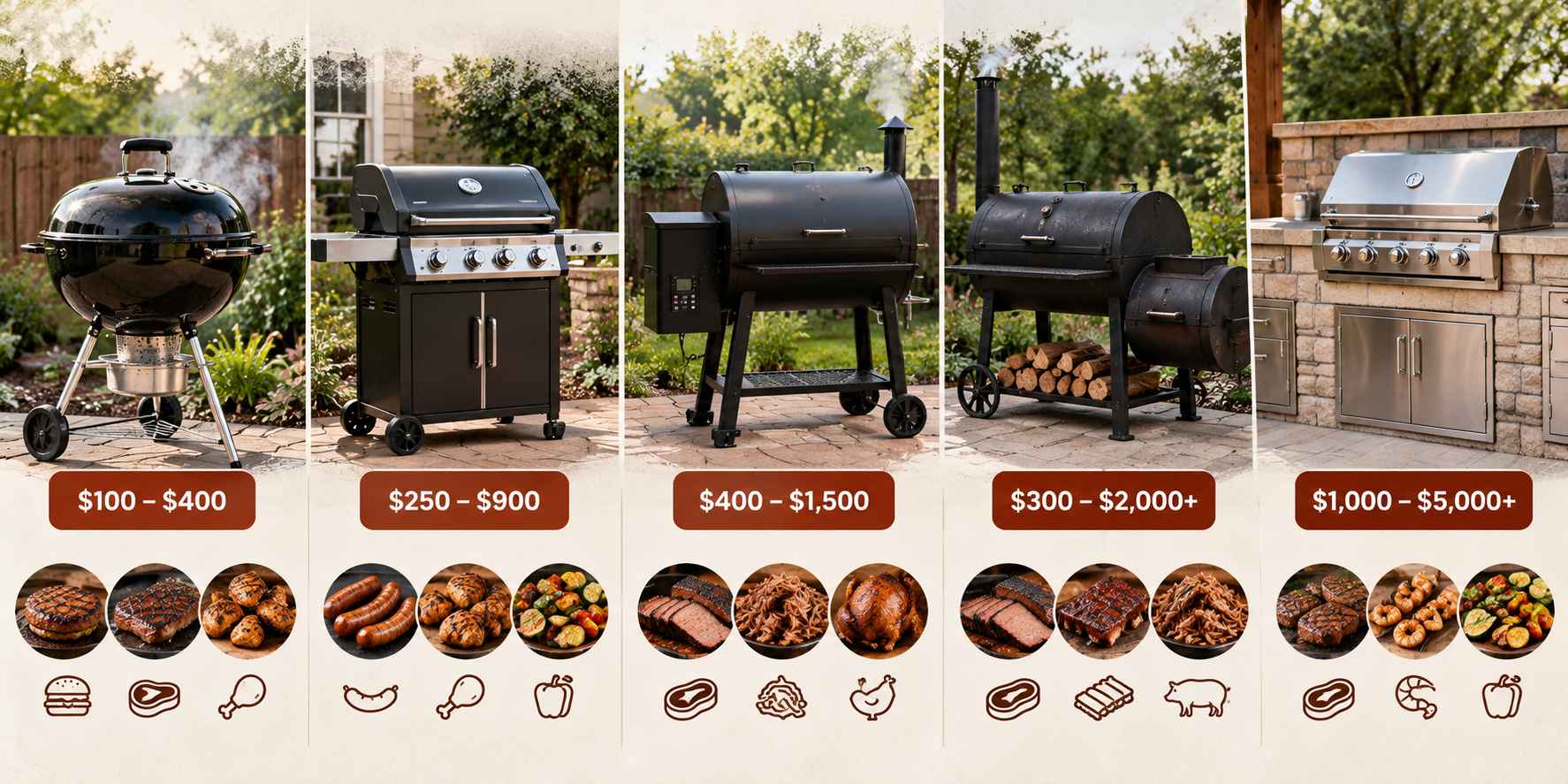
| Grill Type | Typical Budget | Best For |
| Charcoal kettle grill | $100 to $400 | Burgers, steaks, chicken and occasional smoking |
| Two or three-burner gas grill | $250 to $900 | Quick family meals and regular grilling |
| Pellet grill | $400 to $1,500 | Low-temperature smoking and longer cooks |
| Offset smoker | $300 to $2,000+ | Traditional wood-fired barbecue |
| Built-in gas grill | $1,000 to $5,000+ | Permanent outdoor kitchen installations |
Planning ranges for equipment, not live retailer quotations.
Charcoal is an affordable starting choice if you enjoy managing the fire. Gas is convenient when you want dinner ready without spending much time preparing the grill.
For anyone interested in smoking meat and finishing it over high heat, the reverse-sear cooking method works especially well with thicker steaks.
Do not buy the biggest grill you can afford. Buy one with enough cooking space for the number of people you regularly feed.
3. Add a Preparation Table Before Building Expensive Counters
Cooking outside without a preparation surface means balancing plates on a grill shelf and carrying everything back into the kitchen.
A freestanding stainless steel table is a useful alternative to built-in countertops. It is easy to clean, resists weather when properly specified and can be moved if you rearrange the patio.
A table around 36 to 48 inches wide provides useful room for trays, utensils and ingredients. Larger setups may benefit from a second surface for serving cooked food.
Keep raw meat separate from ready-to-eat food. Use separate cutting boards and utensils, and clean surfaces after handling raw ingredients.
For permanent BBQ islands, stone, concrete and suitable outdoor countertop materials can work well. Check their maintenance requirements and resistance to heat and staining before buying.
Leave enough space beside the grill to set down a hot tray safely without blocking access to the cooking surface.
4. Choose a Patio Surface That Handles Heat and Grease
A BBQ area needs a stable surface that can be cleaned after cooking.
Concrete is a straightforward choice for many backyards. Pavers and natural stone are attractive alternatives, especially when the patio also serves as an outdoor dining area.
According to HomeGuide, a basic concrete patio can cost $4 to $12 per square foot installed, while pavers commonly cost $10 to $17 per square foot.
Actual prices depend on excavation, drainage, access and local labor costs.
Do not place charcoal grills on surfaces that are not approved for the heat and fire risk involved. Follow the manufacturer clearance instructions, particularly around combustible decking and nearby walls.
Make sure the patio drains away from the house rather than collecting water around the cooking equipment.
5. Set Up a Comfortable Outdoor Dining Area
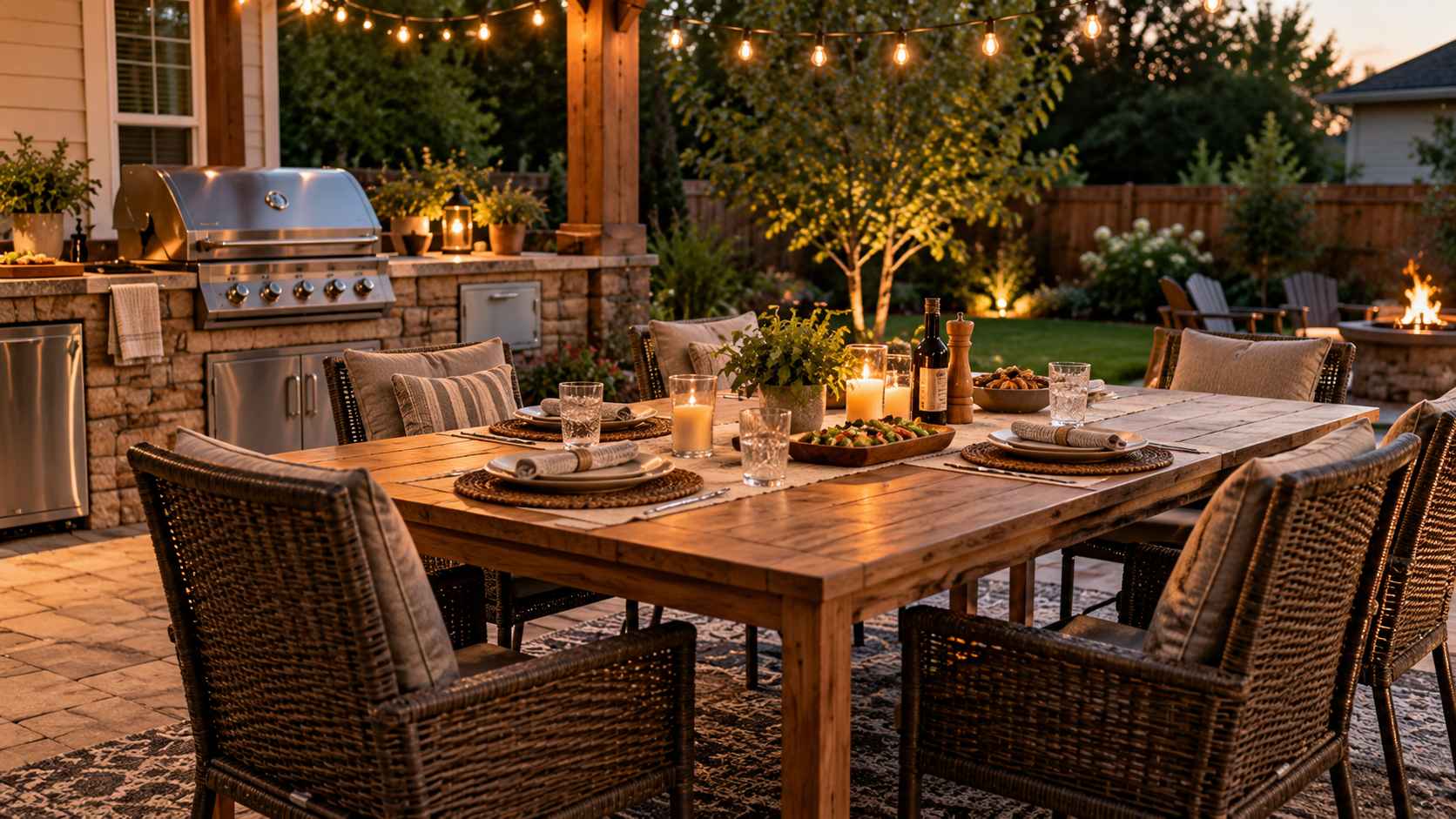
Once the grill and preparation table are in place, the next purchase should be somewhere to eat.
For a family of four, a rectangular table measuring around 48 by 30 inches can work, provided the chairs have enough room to move. A round table may fit better on a square patio.
Keep dining furniture outside the grill clearance area. Guests should not need to squeeze behind a hot barbecue to reach their seats.
Outdoor furniture comes in timber, powder-coated metal, resin wicker and other weather-resistant materials. For a lower-maintenance option, composite outdoor furniture is also available in benches and seating designs suitable for garden dining areas.
Check the weight, cleaning instructions and weather resistance before purchasing.
If the budget is limited, start with a table and four comfortable chairs. Extra lounge furniture can wait until you know how much space remains.
6. Add Lighting Without Running Expensive New Wiring
Evening barbecues become difficult when you cannot see the food properly.
Start with lighting around the grill and preparation table. A portable rechargeable work light or suitable outdoor fixture can illuminate the cooking area without requiring major electrical work.
Warm string lights can make the dining area more comfortable after sunset, but they should not hang close to the grill or interfere with required clearances.
For permanent electrical installations, use outdoor-rated fixtures and a qualified electrician.
Keep cables away from wet surfaces and walking routes. A guest carrying a plate should not have to step over extension cords in the dark.
7. Plan Storage for Tools, Fuel and Serving Equipment
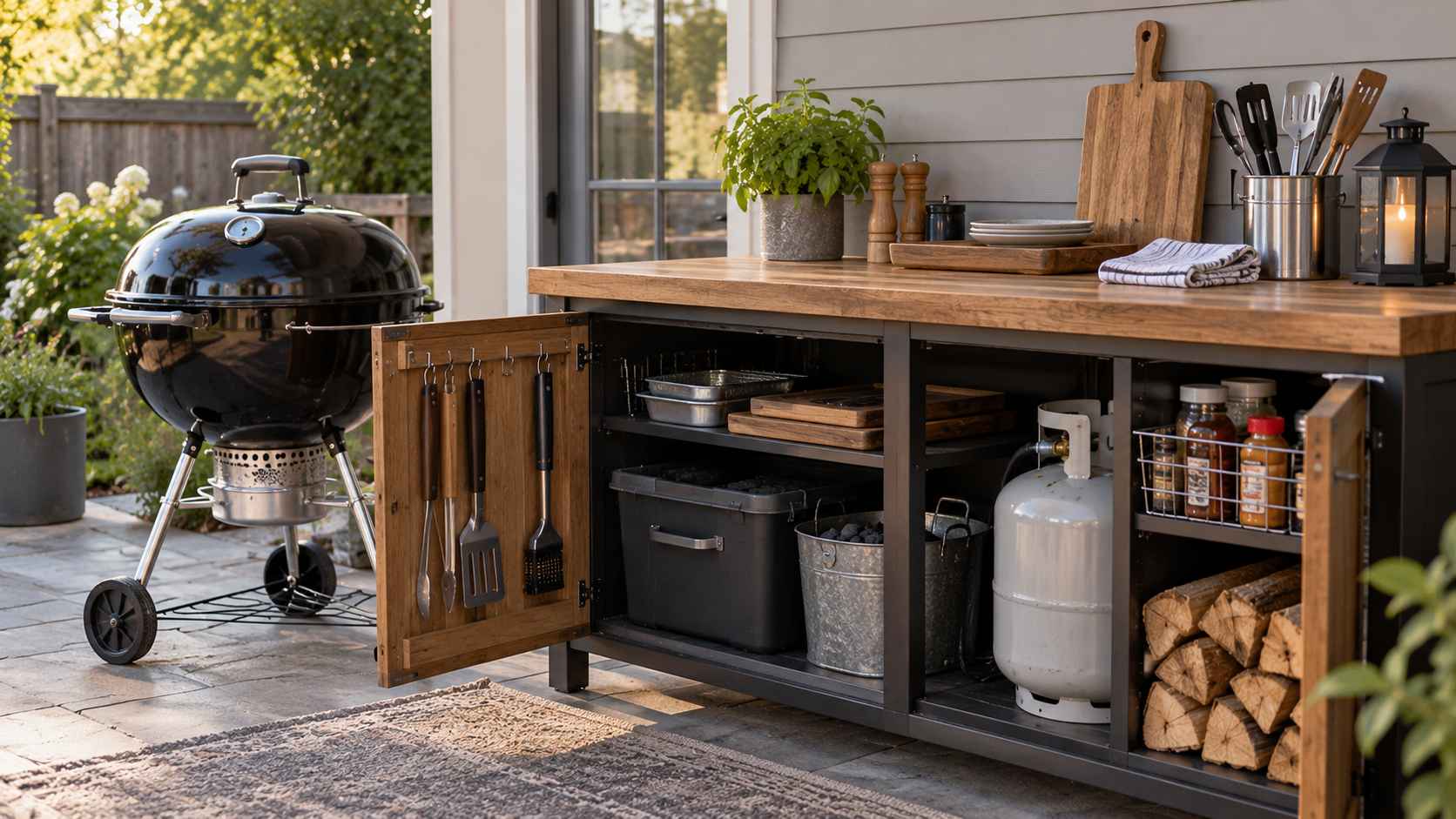
A small cabinet or storage bench can hold grilling tools, cleaning supplies and outdoor tableware.
Keep frequently used items close enough to reach without leaving the cooking area unattended. Long-handled tongs, heat-resistant gloves, a grill brush suitable for the cooking grates and a reliable meat thermometer are useful starting purchases.
Propane cylinders require special care. Store them upright outdoors according to applicable safety rules, not inside a garage or an ordinary enclosed cabinet.
Charcoal should stay dry and away from ignition sources. Allow used coals to cool completely before disposing of them in an appropriate metal container.
A cover made for your grill can protect it when not in use, provided the equipment has cooled fully before covering.
8. Is an Outdoor Sink or Refrigerator Worth the Cost?
An outdoor sink sounds convenient, but installing one may require water supply connections, suitable drainage and winter protection in colder climates.
Plumbing and electrical work can add thousands of dollars to an outdoor kitchen project.
If your BBQ area is near the house, carrying dishes inside may be easier than installing a second sink.
The same applies to an outdoor refrigerator. A cooler filled with ice can keep drinks cold during occasional gatherings without requiring a permanent appliance.
For regular entertaining, an outdoor-rated refrigerator may be worth considering. Ordinary indoor refrigerators are not designed for exposure to rain, high temperatures or freezing conditions.
Buy expensive appliances after you have used the space for several weekends. You may discover that a simple serving cart and cooler already cover everything you need.
9. A Realistic $1,500 Backyard BBQ Budget
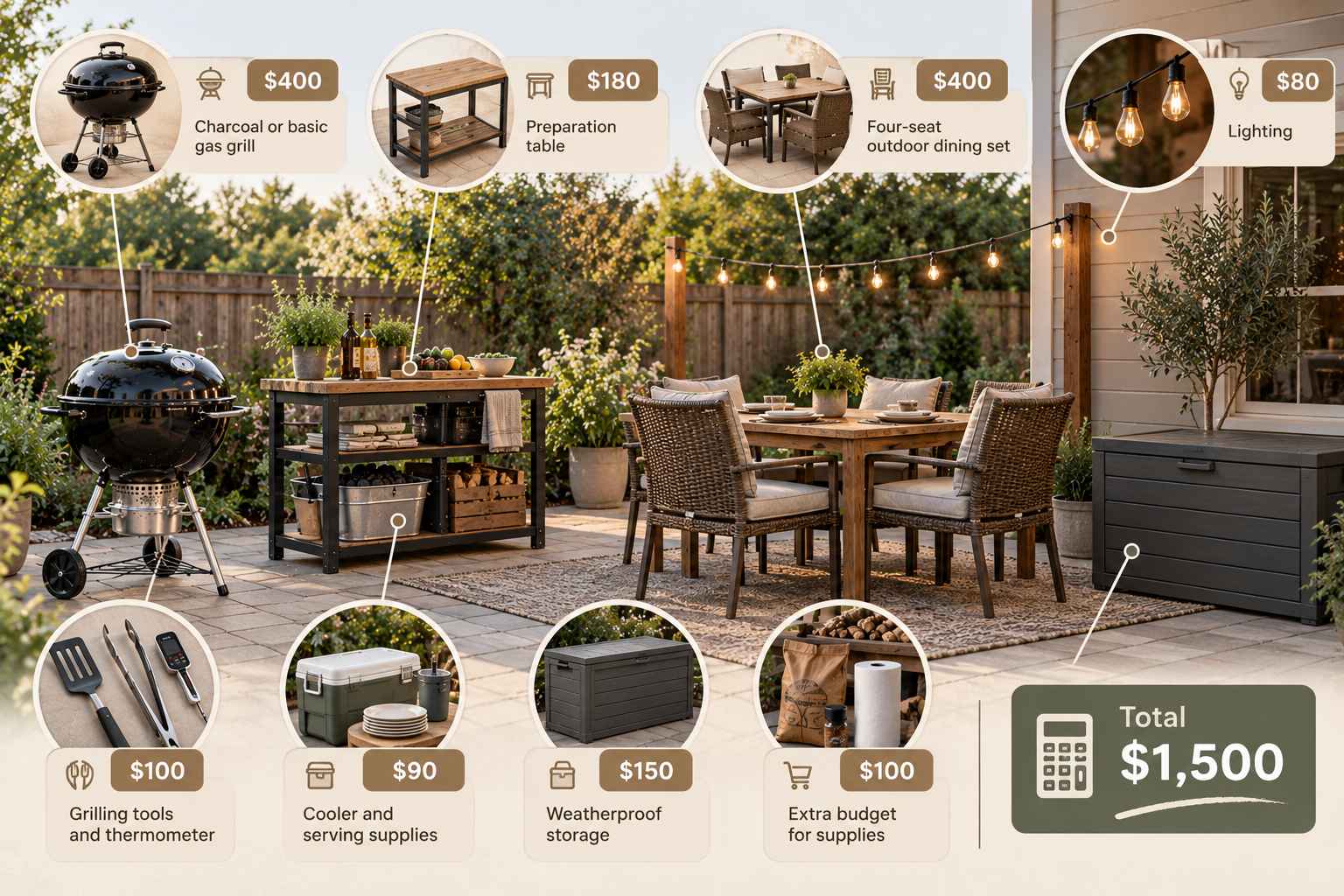
If you already have a suitable patio, $1,500 can cover the main equipment and furniture without any permanent construction.
| Item | Budget |
| Charcoal or basic gas grill | $400 |
| Preparation table | $180 |
| Four-seat outdoor dining set | $400 |
| Grilling tools and thermometer | $100 |
| Lighting | $80 |
| Cooler and serving supplies | $90 |
| Weatherproof storage | $150 |
| Extra budget for supplies | $100 |
| Total | $1,500 |
All prices are illustrative allowances. Local store prices and the size of the equipment can change the final amount.
For a cheaper start, use an existing dining table and buy a smaller charcoal grill. Spend the money saved on a reliable thermometer, safe cooking tools and a sturdy preparation surface.
10. What Does a $5,000 Backyard BBQ Area Look Like?
A $5,000 budget offers room for better equipment and improvements to the dining area.
For example, you could allocate $1,200 to a larger gas grill or pellet smoker, $500 to a preparation station, $1,000 to dining furniture and $400 to lighting and storage.
The remaining $1,900 could contribute to patio repairs, additional paving or other necessary work.
If the existing patio is in poor condition, however, repairing the surface should come before buying premium cooking equipment.
Keep in mind that a professionally installed outdoor kitchen is a much larger project. Built-in appliances, permanent utility connections and custom construction can quickly exceed this budget.
11. Keep the BBQ Area Easy to Clean
Grease and food scraps build up quickly during regular grilling.
Choose a preparation surface that can be wiped clean and leave enough room to reach the grill drip tray.
Clean cooking grates using the manufacturer instructions and remove grease buildup before it becomes a fire hazard.
Place a covered trash container away from the grill, and keep separate bins for recycling if space allows.
For a family cookout, simple food is easier to manage than preparing six dishes simultaneously. Burgers, chicken skewers and grilled vegetables can share the same cooking area when you manage temperatures and avoid cross-contamination.
Last Words
Spend more on the grill if you cook outside several times a week. Better temperature control, durable grates and easy access for cleaning are worth paying for.
A reliable thermometer is another purchase worth making early. It helps you avoid overcooking expensive meat and confirms when food reaches a safe internal temperature.
Save money on decorative extras. An outdoor television, permanent bar counter or elaborate lighting system will not improve the quality of the barbecue.
For occasional gatherings, a movable grill and freestanding furniture offer more flexibility than a built-in kitchen.
Build the cooking area first, add comfortable seating and use the space before deciding on larger upgrades. A well-positioned grill, enough room to prepare food and a table where everyone can sit are all you need for a backyard BBQ that gets used throughout the summer.